A Personal Journey in Improving Quality and Reducing the Costs of Healthcare through Standardization and Optimization by Franklin Gaylis, MD
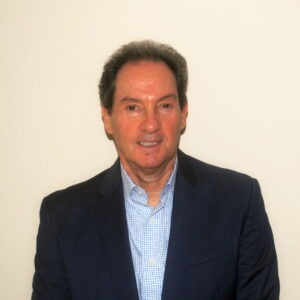
Franklin Gaylis, MD, is a urologist, Executive Medical Director of Unio Health Partners, Chief Scientific Officer of Genesis PC,and Professor of Urology at UC San Diego. He lectures nationally and internationally on healthcare quality and cost.
In the early 1990s, shortly out of his urology residency at Northwestern University , Dr. Gaylis was consulting with a patient and his wife concerning the option of his performing a radical prostatectomy . Gaylis shared the details of the operation and discussed the potential outcomes based on the published literature by Drs. William Catalona and Patrick Walsh. In response, the wife said, “Tell us about your own results, Dr. Gaylis, ” to which he responded, “I think they are good but have never measured them. ” The patient and his wife stood up and said, “Thank you, Dr. Gaylis, but we will find a surgeon who knows his own results!” and promptly left the office.Gaylis, stunned by what had transpired, then reflected on the wife’s comments, realizing the importance of a surgeon knowing their own outcomes when discussing an operation with a patient. This event spurred a career in which he focused on measuring and improving his own surgical outcomes, as well as on creating and implementing evidence-based best practices to enhance medical quality and reduce costs more broadly. During his tenure as medical director at a community hospital before the era of electronic health records, Gaylis led a team that developed preprinted Standardized Evidence-based Medical Orders (SEBMOs) to prompt physicians to adhere to clinical guidelines when managing patients for conditions such as diabetes, heart failure, and pneumonia. They observed a striking benefit of implementing pre-printed admission SEBMOs, including a 300% increase in preventive measures for developing life-threatening deep vein blood clots compared to traditional handwritten admission orders that lacked a reminder present in SEBMOs.
He began measuring patient outcomes and seeking ways to improve them. In publishing his radical prostatectomy results, he observed significant improvements after implementing a clinical pathway using original questionnaires, conducted before validated patient-reported outcome tools were available. In this way , Gaylis and colleagues pioneered value-based care—better results at lower cost—even before the term was established.
After co-founding and serving as medical director of the largest community urology practice in California, Gaylis helped his colleagues provide evidence-based care for men with low- risk prostate cancer. Working with health informaticians, Gaylis and his team added templates to the electronic medical record to gather relevant data on active surveillance for prostate cancer, which was underused nationwide. Comparing colleagues’ performance data led to significant improvements that Gaylis later published in medical journals.
“Indeed, between the health care that we now have and the health care that we could have lies not just a gap, but a chasm.”
Six years ago, Gaylis met Dr. Catalona at a urology meeting and accepted his invitation to collaborate on a project to improve the adoption and quality of active surveillance (AS) for low-risk prostate cancer. Dr. Catalona had formed a national cohort, the Prostate Cancer Active Surveillance Project (PCASP). The team defined metrics for AS quality and worked with the largest US payor to advance its adoption and quality . Gaylis and his team received a pay-for-performance demonstration project from UnitedHealthcare. Their key finding: physicians respond better to peer comparison than to financial incentives.
Gaylis, Catalona, and their collaborators recently published a review that appeared on the cover of UROLOGY, The Gold Journal 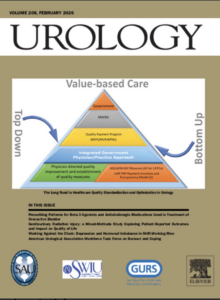 (see
(see
page 1) surveying the historical perspective on the evolution of healthcare quality during the past century . They pointed out that while quality principles have evolved considerably , the optimal standardization of medical practice remains an ongoing challenge. Despite some successes, there is likely a long road ahead to standardize evidence-based practices and measures to optimize patient care. Their article acknowledged pioneers such as the late Dr. Ernest Codman, considered the father of outcomes science, and institutions such as the National Academy of Medicine, which, in its landmark 1999 publication “To Err is Human,” reported that up to 98,000 Americans die each year from medical errors. The Academy suggested several interventions to promote quality improvement. In its follow-up publication, “Crossing the QualityChasm”, the Academy stated, “Indeed, between the health care that we now have and the health care that we could have lies not just a gap, but a chasm,” promoting six aims for improving healthcare quality (safe, effective, patient-centered, timely , efficient, and equitable).
Gaylis et al. highlighted the need for transparent reporting of patient outcomes. Some specialties, such as cardiac and transplant surgery and assisted reproductive interventions, routinely publish physician outcomes so patients can make informed choicesabout their care. “Implementation Science” aims to reduce the often- quoted 17-year lag between new medical evidence and its use in routine practice.
Gaylis’ team is currently studying artificial intelligence to extract and analyze medical record data for quality improvement. He also focuses on teaching future physicians to measure, manage, and improve healthcare quality without increasing costs. Gaylis conducts research on quality improvement and ways to optimize outcomes. He develops and evaluates clinical tools to improve results following radical prostatectomy while reducing costs. Recently , he joined a panel to help create a Centers for Medicare and Medicaid Services (CMS)-approved value pathway to improve urological care. He also received a Pfizer quality-improvement grant based on his experience applying implementation science principles.

The Medicare Crisis brings major pressure. The Medicare Trust Fund is set to be insolvent by 2033. Access to care is increasingly difficult, and healthcare costs continue to rise. This puts more emphasis on routine tracking and reporting. Past efforts faced obstacles. Gaylis, an advocate for urology quality care, says reporting outcomes should be routine. He emphasizes, “You can’t manage what you can’t measure, and you can’t improve what you can’t manage. ” This underscores the importance of understanding your outcomes and standardizing measures to advance medical care quality.