MICHAEL S. LEAPMAN, MD, MHS: A Principled Physician Delivering the Highest Level of Care with Consideration and Compassion
Dr. Michael S. Leapman is one of the nation’s leading prostate cancer specialists and researchers. He is widely recognized for his work to improve the diagnosis, treatment, and long-term care of men with prostate cancer.
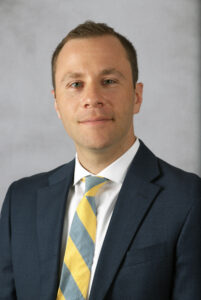
Education, Training, and Appointments
After graduating from Cornell University, Dr. Leapman earned his medical degree from the University of Maryland. He completed his general surgery and urology training at Mount Sinai Hospital in New York, followed by a fellowship in urologic oncology at the University of California, San Francisco (UCSF), where he received advanced training in the care of men with prostate cancer. In 2016, he joined the faculty at Yale University where earned a Master of Health Science degree.
Today, Dr. Leapman serves several leadership roles at Yale. He is Associate Professor and Vice Chair of Research in the Department of Urology, with a joint appointment at the Yale School of Public Health. He also co-leads the Cancer Prevention and Control Research Program at the Yale Smilow Comprehensive Cancer Center, directs the Prostate and Urologic Cancers Program, and leads a multidisciplinary team dedicated to improving prostate cancer care.
Through his work as a surgeon, researcher, educator, and clinical leader, Dr. Leapman is helping shape the future of prostate cancer care while remaining committed to providing compassionate, personalized care for every patient.
The Mentors Who Shaped His Career
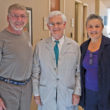
Like many successful physicians, Dr. Leapman credits several mentors with helping shape his career. His first mentor was Dr. Toby Chai, who inspired him to pursue urology. Dr. Leapman describes Dr. Chai as “thoughtful and charismatic, with infectious enthusiasm.” Later, while training at the University of California, San Francisco (UCSF), he was mentored by Dr. Peter Carroll, one of the world’s leading prostate cancer specialists. Dr. Leapman says Dr. Carroll instilled in him a strong sense of commitment, purpose, and dedication to improving the lives of patients with prostate cancer. During his time at UCSF, Dr. Leapman also met Dr. Catalona who was collaborating with Dr. Carroll on a research project. He admires Dr. Catalona’s unwavering commitment to patients, remarkable energy, and disciplined approach to advancing prostate cancer care.
Advancing Prostate Cancer Research and Patient Care
In addition to caring for patients, Dr. Leapman is an internationally recognized prostate cancer researcher. He has received numerous honors and currently leads or collaborates on several major research studies funded by organizations including the National Institutes of Health (NIH), National Cancer Institute (NCI), American Cancer Society, Prostate Cancer Foundation, and the Urological Research Foundation. His research includes laboratory studies, clinical research, and educational programs for future physicians.
Much of Dr. Leapman’s work focuses on improving the care of men with prostate cancer, particularly those considering active surveillance – careful monitoring of low- and selected intermediate-risk cancers instead of immediate treatment. His goal is to determine which men can safely avoid or delay surgery or radiation, while identifying those whose cancers are more likely to become aggressive and should be treated sooner.
 To answer these questions, Dr. Leapman and his colleagues analyze information from large groups of patients treated across the United States. By studying real-world outcomes, they are helping doctors better understand how newer technologies – including advanced MRI scans, genetic tests, biomarkers, and artificial intelligence (AI)- can improve diagnosis and guide treatment decisions.
As both a prostate cancer surgeon and researcher, Dr. Leapman brings a unique perspective to his work. Every day, he helps patients make difficult decisions among surgery, radiation therapy, active surveillance, and other treatment options. His research is driven by the same questions his patients ask: Is treatment necessary now? Can it safely be delayed? Which tests provide meaningful information, and which may lead to unnecessary treatment?
His current NIH-funded research and new grant proposals seek to provide clearer answers for men with intermediate-risk prostate cancer. These studies will evaluate how advanced imaging, genomic testing, and AI-based technologies can better predict which cancers are likely to progress and which can be safely monitored. The ultimate goal is more personalized care -helping every man receive the treatment that is right for him while reducing unnecessary procedures and preserving quality of life.
To conduct this work, Dr. Leapman has partnered with Dr. William Catalona and investigators in the Prostate Cancer Active Surveillance Program (PCASP), founded by Dr. Catalona. Their multidisciplinary team includes experts in prostate cancer, genetics, imaging, health services research, and medical decision-making.
Dr. Catalona believes this research has the potential to change clinical practice. “This work addresses one of the most important questions facing men with intermediate-risk prostate cancer – how long active surveillance can be safely continued and which patients truly need treatment. By combining large-scale patient data with sophisticated predictive models, the research will provide individualized estimates of risk and help physicians and patients make more informed decisions. The findings could influence future treatment guidelines, insurance coverage decisions, and ultimately improve care for thousands of men.”
A Life Dedicated to Family and Patients
Outside the operating room and research laboratory, Dr. Leapman’s life revolves around his family. He and his wife are raising three young, active children.”The kids keep us busy,” he says with a smile.
Family takes up most of his free time. When he has a chance to relax, he enjoys running and recently took up road cycling as another way to unwind.
Balancing family life with a busy surgical practice and research career requires careful time management. Dr. Leapman has authored or co-authored more than 270 scientific publications and book chapters, including many in leading medical journals, often written during evenings, between surgeries, or on his days off.
Looking back over the past 20 years, he is encouraged by how far prostate cancer care has come. “When I began my career, treating prostate cancer was very different,” he says. “The progress we’ve made has been remarkable.”
Today’s patients benefit from major advances in MRI imaging, genetic testing, active surveillance, surgery, radiation therapy, and new medications. These innovations have given many men more treatment options and better outcomes than ever before.
“It’s easy to focus on the challenges that remain,” Dr. Leapman says. “But when you look at the bigger picture, we’ve made incredible progress.”
He believes the future is even brighter. New discoveries continue to emerge, bringing hope for more personalized and effective care.
“We’re making a difference,” he says. “The next breakthrough could come from anywhere. Patients, advocates, physicians, researchers,

and healthcare leaders all have an important role to play.”
That optimism—and his commitment to improving the lives of men with prostate cancer—continues to drive his work every day.