The Best Systemic Therapy with or Without Radical Prostatectomy in the Management of Men with Oligometastatic Prostate Cancer:
The “RAMPP” Randomized Controlled Trial
The “RAMPP” randomized clinical primary prostate cancer tumor in men trial was designed to test whether with low-volume metastatic disease, adding radical prostatectomy to what was then considered the “best systemic (i.e., hormonal and chemotherapy) therapy improves the treatment outcomes for men with so-called “oligometastatic” prostate cancer (only 1-5 low-volume metastases). 132 patients were randomized to receive radical prostatectomy +” best systemic therapy” or best systemic therapy alone. The researchers closed this trial prematurely after results from the “STAMPEDE” Trial showed an overall survival benefit from radiotherapy to the primary prostate cancer tumor in men with low-volume metastatic disease, because randomizing men to the no-local treatment arm of “RAMPP” would no longer be ethical. Nevertheless, after 5 years of follow-up, the patients randomized to the prostatectomy arm had a significantly lower prostate cancer-specific mortality rate (13% vs 23%). However, there was no difference in overall survival or cancer progression, and serious complications occurred in 14% of the surgical cases. Thus, despite limitations, the “RAMPP” Trial provides the first randomized evidence suggesting that radical prostatectomy might improve cancer-specific outcomes in men with oligometastatic prostate cancer. In a separate publication, experts placed the interpretation of the “RAMPP” trial results in context.
First, the “RAMPP” Trial was halted early because of “external evidence” from a different trial (“STAMPEDE”), which was ethically a sound decision, but it prevented adequate statistical power for “RAMPP.” Moreover, the “best systemic therapy” used was outdated because few patients received the latest intense hormonal therapy drugs, and chemotherapy (docetaxel) use was inconsistent.
Second, clinicians staged only 30% of patients with the latest PSMA PET scans. Therefore, it is likely that many whose cancer they categorized as “oligometastatic” would have been classified as having higher volume disease.
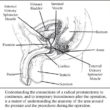
Third, the “RAMPP” Trial now indirectly challenges the previous view notion that radiotherapy (but perhaps not surgery), is the only acceptable treatment of the primary tumor in patients with oligometastatic disease. Accordingly, surgery may now be considered a legitimate option for treating the primary tumor in such patients. When the treatment of the primary tumor involves only radiotherapy, leaving the prostate in the patient’s body can lead to significant urological problems, such as blocking the flow of urine, infection, and bleeding. Surgery also provides more complete information about the extent and biology of the tumor. Nevertheless, the pathology findings from prostatectomy revealed that 60% of men still had cancer cells at the surgical margins and/or lymph-node invasion, which underscores the need for more accurate preoperative local staging, because it is essential to be able to determine through accurate preoperative imaging that the surgeon can completely remove the primary tumor. “Intensified” preoperative hormonal/chemotherapy provides information about the tumor’s hormone and chemotherapy sensitivity, and the associated tumor “shrinkage” may make complete resection of the primary tumor more feasible. Future efforts will likely integrate intensified hormonal therapy with chemotherapy (“triplet therapy”) to optimize the control of the cancer.
Eur Urol. 2025 Oct 3:S0302-2838(25)04687-1. doi: 10.1016/j.eururo.2025.09.4144.https://doi.org/10.1016/j.eururo.2025.09.4144