Use of Circulating Tumor Cells Advances Aggressive Cancer Treatment
Prostate cancer poses unique challenges for prediction and treatment due to its highly variable tumor behavior, both between different

patients and within the same patient.
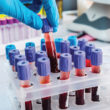
Circulating tumor cells (CTCs) are cancer cells that detach from a primary tumor, travel through the bloodstream and initiate metastasis. CTCs can be collected via blood test, making them a minimally invasive “liquid biopsy” that can be repeated over time to monitor disease progression. Studies have shown that CTCs can provide important information about aggressive cancer types, how cancer spreads, and how patients respond to treatment. In advanced prostate cancer, CTC counts are already approved by the FDA as a prognostic tool, but they are not widely used in everyday care, because CTCs are difficult to isolate and analyze.
New technologies are improving the capture and study of CTCs, including label-free methods that do not rely on specific tumor markers. These advances have renewed interest in CTCs after attention had shifted to cell-free DNA testing. Detailed molecular analysis of CTCs may help identify which patients are most likely to benefit from certain treatments.
Overall, CTCs reflect the biological diversity of prostate cancer and could help doctors predict outcomes and treatment response. However, researchers need to conduct more studies—especially in early-stage disease—to improve detection methods and fully integrate CTC analysis into routine prostate cancer care.
Nature, Jan. 2026.